
Get to know your neighbours
Knowing those who live around you ensures you can support one another through challenging times, like an emergency, especially those who may need some extra help.
People who are connected socially tend to;
Have increased wellbeing as they feel supported.
Have better access to resources. In an emergency, your neighbours may have items that you can borrow such as a chainsaw, torch, or spare batteries.
Have better access to information. Word of mouth is the best and fastest way of spreading information and widening your social network. The more access to information you have, be it social media or huddling around the car radio during an emergency, the better informed you will be.
Contribute more to their community because they have a sense of belonging and purpose.
Not sure how to make the connection with your neighbours? Here are some of our tips!
Begin with a conversation. Introduce yourself to your neighbours if you haven’t done so already! A friendly chat can go a long way in building trust and opening lines of communication. Exchange numbers so you can keep in contact and reach out to one another easily.
Connect with kai! Sharing food is a great way to bring people together and get to know each other. You could organise a neighbourhood BBQ with those who live on your street, or it can be as simple as popping over the fence with some baking or inviting your neighbours over for a cup of tea.
Check out the Neighbours Aotearoa website. Neighbours Aotearoa is a community development initiative dedicated to creating resilient neighbourhoods. Visit the Neighbours Aotearoa website for more information and ideas about linking up in your local community.
Join a Neighbourhood Support Group!
Community response planning
When an emergency strikes, it is the community who are the first to respond. No one knows a community better than the people that live and work in it. Building a plan that is uniquely tailored to your community before an emergency occurs, ensures everyone is well connected, knows what to do and where to go to get help.
What are Community Response Plans and who makes them?
Community Response Plans are developed by community champions and/ or representatives of stakeholder organisations such as local schools, businesses, Neighbourhood Support, Lions, Residents Associations and so on.
A working party is established with the goal of completing the planning process and maintaining the plan, while also building and strengthening relationships. Ownership of the plan remains with the community, represented by the stakeholder group. It’s important to understand that this is a continuous process, that the plan is a living document that will need to be reviewed regularly, as opposed to just sitting on a bookshelf! Your Community Response team will need to meet regularly and discuss your response as well as how you can promote preparedness in the community.
A community response plan should include information such as how your community plans to self-evacuate and respond to the initial stages of a an emergency, and local evacuation and hazard maps.
How Do I find out if a Community Response Plan is in place for my community already?
If you’re unsure if your community has a community response plan already established, connecting with community champions (those people who have taken the lead in local community engagement) and/or representatives of stakeholder organisations in your community is a great place to start. This could include reaching out to your local:
Council
Neighbourhood Support
Volunteer, church and sports groups
Schools
Marae, or
Service organisations.
If you haven’t got a Community Response Plan in place, have a conversation with the leaders in your community and establish a group to begin planning.
Pro Tip!
Marae emergency response planning
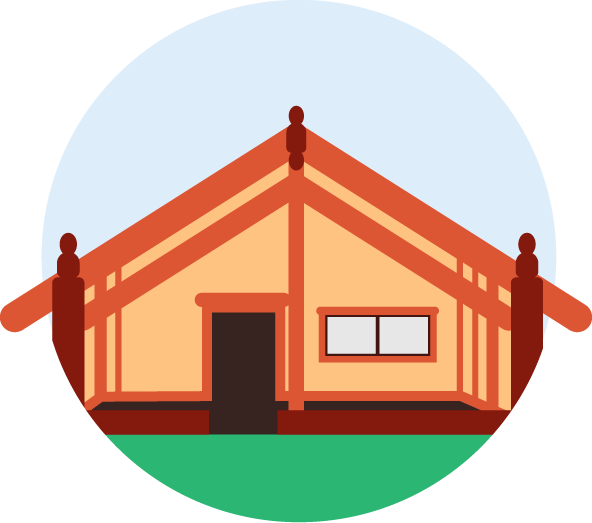
The marae is central to the Māori way of life. It is the focal point for Māori who share relationships with one another as whānau, hapū, and iwi. It is the central meeting place to discuss, and debate matters of significance, to celebrate important occasions and also bid farewell to those who have passed away.
During an emergency, the marae can become a hub supporting the Māori community, and at the discretion of the Marae Committee, a place for members of the community to gather. In civil defence emergencies, marae can act as community led centres that can provide for immediate needs like shelter, overnight accommodation, catering facilities, ablutions and holistic support.
The Bay of Plenty Civil Defence and Emergency Management support marae in the region to develop Marae Preparedness Plans through workshops and meetings. These workshops and meetings:
Raise awareness of the risks and hazards faced by your marae community so it can be better prepared
Build a stronger relationship with Civil Defence and responding agencies
Resources to support marae emergency response planning:
Volunteering in an emergency
Volunteers are a huge part of any emergency. Here at the Bay of Plenty Civil Defence Group, we utilise volunteers that are trained by us, we work closely with other volunteer organisations, and we coordinate spontaneous volunteers.
Becoming part of a volunteer organisation when there is no current emergency is one of the best ways to help if you want to be involved during an emergency response. Whether you want to help out on a regular basis or think you have some useful skills when disaster strikes, there are loads of options to suit what you're looking for.
Volunteer organisations we work with
During emergencies, we work closely with volunteer partners who make sure we have skilled and equipped people ready to support communities in need. You can find out about volunteer opportunities with our partner agencies by visiting their website:
The Bay of Plenty Response Team, NZ-RT16
New Zealand Response Teams (NZ-RT’s) are teams of qualified first responders who support Civil Defence Emergency Management Groups and their communities during and after emergency events. Their capability can include light rescue, mass casualty support, rope rescue, and storm response. NZ-RT’s are often called upon to support out-of-region responses.
In the Bay of Plenty, we are fortunate enough to have a highly skilled New Zealand Response Team of our own based in Tauranga, NZ-RT16. This team is made up of individuals with a diverse range of valuable talents and skillsets from first aid, tradespeople from different backgrounds, experience from other emergency services and search and rescue organisations.
If you would like to learn more about the Bay of Plenty Response Team (NZ-RT16), or interested in joining, you can visit their homepage, find them on Facebook or alternatively, get in touch via email: info@nzrt16.com
Community Emergency Hubs
In a disaster such as a big earthquake, there is likely to be widespread damage to power lines, water pipes, buildings, roads, and phone networks. Emergency services will be dealing with the most urgent matters, so the people you live nearest to will be your most immediate, and ongoing, source of support.
That’s where Community Emergency Hubs (also known as Hubs) come in. A Community Emergency Hub is a place where you, your whānau, and your neighbours can go to help each other during a major emergency, such as an earthquake or flood. At a Hub, you can:
Ask for and offer help by sharing skills and resources among your community
Share and find information about what's happening in your suburb
Start organising the clean-up of your community
Be in the company of others facing a similar situation
What is the different between a Civil Defence Centre and a Community Emergency Hub?
Civil Defence Centres (CDC) offer a safe place in local communities where people can go for help during an emergency. They are set up and run by Civil Defence Emergency Management staff and volunteers.
Hubs on the other hand, are run by people like you in your local community without official assistance. Each Hub has a guide for how to coordinate the sharing of information, skills and resources that exist in your community.
There are no supplies, food, water or blankets stored at Hubs. Our communities are full of resources to get through the first week after an emergency. Your community can gather the things it needs at the time by working together.
Thinking of setting up a Community Emergency Hub in your area or would like some more information?
Please get in touch with your local council. You can find their contact details by visiting our Districts page.