Emergency toilets

After a large earthquake, don’t flush! In an emergency, it is possible for water and wastewater services to become disrupted. Even if your water taps are still running, wastewater pipes could be broken, and no one wants to see their wees and poos flowing outside on your property (or your neighbour’s property)!
If the water stops coming out of your tap, then it will also stop filling up your toilet cistern. Having a plan for how you would manage this situation can help keep yourself, your whānau and the environment safe. You will need to think about what you can use to build an emergency toilet, and how you will dispose of waste safely.
Different kinds of emergency toilets
Option 1: Build a backyard long drop
Dig a hole up to 1 metre deep and 30-40cm wide. Be sure to keep well away from any water source, vege gardens, and ensure your hole is above the groundwater table.
After each use, cover your wee and poo with soil or other mulch.
Ensure you keep the hole covered after each use for hygiene and safety reasons. You can do this by placing a heavy piece of wood or cardboard over the hole.
When your poo and wee get to 30cm below the surface, fill in the hole with soil, and dig yourself a new long drop!
Option 2: Emergency Bucket Toilets
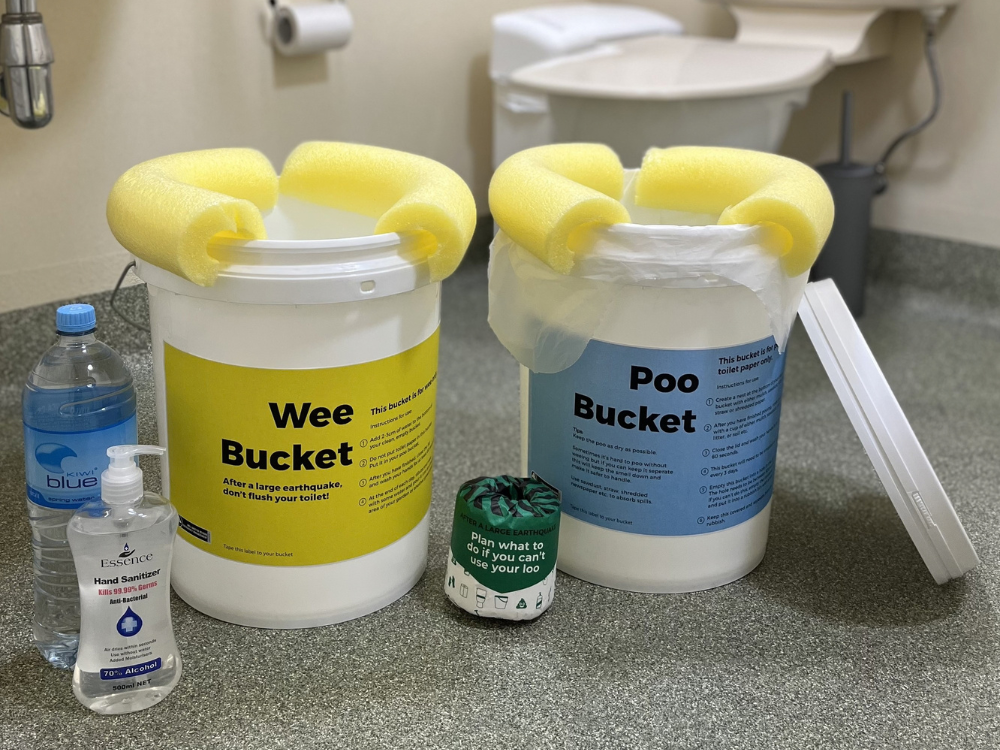
Use two sturdy 15-20-litre bucket that has a tightly sealed lid. For example, a rubbish bin or empty paint bucket. You’ll need one for your wees and one for your poos.
It’s easy to make a toilet seat for your emergency toilet by using items you may have at home. For example, you can cut a hole in a garden chair and place it over your bucket, cut a slit in a pool noodle, and place it around the bucket edge, or unscrew the toilet seat from your existing toilet.
Bucket 1 (wee)
Add 2-3cm of water to the bottom of your clean and empty bucket. Use bucket 1 for wee. This bucket should be for wee only (add toilet paper to bucket 2).
Once you have finished, close the lid and wash your hands!
At the end of each day, dispose Bucket 1 safely by diluting your wee with additional water and pour it into a disused area of your garden. If you don’t have a garden, dispose it in another green space.
Bucket 2 (poos)
If you have a garden or green space where you can dig a 50cm hole:
Create a nest at the bottom of your clean and empty bucket. Use bucket 2 for poos and toilet paper only. You do not need to line the bucket with a bag.
When you have finished, add a large cup or handful of dry mulch (sawdust, straw, dry leaves, soil, or shredded newspaper, kitty litter) to cover your poo.
Once you have finished your business, close the lid and wash your hands!
If you do not have a garden or green space:
Line Bucket 2 with a heavy-duty rubbish bag/bin liner.
When you have finished, add a large cup or handful of dry mulch (sawdust, straw, dry leaves, soil, or shredded newspaper) to cover your poo.
Once you have finished your business, close the lid and wash your hands!
Bucket 2 will need to be emptied at least every 3 days. Dispose your poo safely into a 50cm deep hole in the ground if you have a garden or green space at home. If you don’t have a garden or green space (for example, you live in an apartment), tie your poo bag up and remove as much air as possible. Place it in a wheelie bin or rubbish skip bin.
Pro Tip!
Disposing period products, nappies, and wet wipes:
Most tampons, tampons, applicators, pads, nappies and wet wipes aren't biodegradable (or won't break down for many years). Don’t put any of these products in your emergency toilet. Place them in a separate rubbish bag instead.
Tips to keep yourself safe when handling waste:
When emptying emergency toilet buckets, use gloves if possible.
Rinse and clean the poo bucket after emptying and disinfect with a diluted household bleach solution if possible.
Make sure you empty and clean your buckets regularly.
Wash your hands thoroughly using soap and water or hand sanitiser after each use of the toilet or after emptying your bucket. Don’t forget to dry them thoroughly!
If someone in your whānau is unwell (for example, vomiting or diarrhoea), use another bucket if possible, take care when emptying and disinfecting the bucket, and seek medical advice if symptoms persist.
Accessible Options for those with accessibility needs or limited mobility
For some of our whānau, long-drops or emergency bucket toilets are just not practical. There are a few alternative options below that you may wish to explore. Pick the option that will best suit you and/or your whānau’s needs.
Take a chair, make a hole in the base and put it over a long-drop or bucket toilet.
Look into the option of a commode (a portable toilet chair with a built-in pot underneath). This can sit over a bucket or long-drop, or, if it has a pail, place a sturdy plastic bag or bin liner inside.
The last resort option is to place a large, sturdy bin liner/plastic bag inside your toilet bowl. The bag needs to be big enough to cover the whole bowl to avoid spillage. Place some dry material in the bag such as sawdust, straw, dry leaves and soil, or shredded newspaper, to soak up as much wee as possible. Dispose of your bag into an outdoor rubbish bin. Make sure you clean your hands thoroughly.